| |||||||||||||||||||||||||||||||||||||||||||||||||||
|
ai-smart-buildings.com The Intelligent Building BriefIssue №1 · June 1, 2026 · a 12-minute read | |||||||||||||||||||||||||||||||||||||||||||||||||||
|
Intelligence for the people who own, operate, finance, and build commercial real estate. Capital markets, sector flows, the PropTech tape, and the energy/AI shift underneath all of it — what's signal, what's noise, and what we think you should do about it.
| |||||||||||||||||||||||||||||||||||||||||||||||||||
| |||||||||||||||||||||||||||||||||||||||||||||||||||
|
01 · The Lead The two-speed market is now the whole storyIf you take one frame into your next investment-committee meeting, make it this: 2026 is not a recovery, it's a divergence. The headline numbers say the freeze is over — and they're real. U.S. investment-sales volume hit $112.6B in Q1, up 18% YoY, back in line with 2017–2018 levels; CRE lending is projected to jump 38% to ~$805B. Cap rates are stabilizing, and for the first time since 2022 the consensus is that yields are past their peak. But underneath that thaw, capital is sorting into winners and losers with unusual violence — a $1.26T debt wall, 2015-vintage loans refinancing from ~4.5% into ~6.5%, and distress concentrated almost entirely in commodity office. The recovery and the crisis are happening in the same market, at the same time, to different assets.
| |||||||||||||||||||||||||||||||||||||||||||||||||||
|
02 · The Numbers Six figures that frame the year
| |||||||||||||||||||||||||||||||||||||||||||||||||||
|
03 · 📊 The Maturity Wall $1.26 trillion — and 2027 is the peakCRE & multifamily mortgage debt maturing, by year ($B)
It's a rising slope, not a single bad year — smoothed by extend-and-blend. The danger isn't the total; it's the concentration in assets that can't refinance. Multifamily and industrial roll over with a haircut. Commodity office increasingly doesn't roll over at all.
| |||||||||||||||||||||||||||||||||||||||||||||||||||
|
04 · Capital Markets The wall is a ramp — only if you start climbingLending stabilized at ~$583B in 2025 and is projected at ~$805B in 2026 (+38%) — a market re-opening, not bracing for collapse. But the ramp is only gentle for assets with a credible income story. ▸ Hold 2026–2027 maturities? Open the refi conversation 12–18 months early. Lender cooperation is a depleting resource. ▸ Have dry powder? The cleanest entries are recapitalizations of fundamentally-fine assets owned by over-levered sponsors — not heroic office turnarounds. ▸ Underwriting anything? Add two lines to every model: refi-gap risk and energy/carbon risk (§12). | |||||||||||||||||||||||||||||||||||||||||||||||||||
|
05 · 📊 The Cap-Rate Ladder Where capital is hottestLonger bar = hotter sector = more yield compression. Cap rate shown at right.
Data centers sit alone at the top. The rest of the market is repricing toward income durability — which is exactly what the next section maps out. | |||||||||||||||||||||||||||||||||||||||||||||||||||
|
06 · Sector Watch Where the capital is actually goingData centers are the asset class of the cycle — and the window is closing. Priced richer than anything else on ~$700B hyperscaler capex (+60%) and record leasing. The live edge isn't owning a stabilized DC — it's controlling the scarce inputs: power, interconnection, cooling. The binding constraint moved from chips to electricity. Nadella: "GPUs sit idle because we can't find electricity." PJM capacity cleared at $329/MW — 11.4× two years prior. Gas-turbine lead times: 2–3 → 7–8 years. Office is two assets sharing a name — trophy tightening (A+ occupancy 78.6%), commodity in runoff (19% vacancy). Quiet winners: multifamily (led Q1, 0.5% delinquency), industrial (96.8% occupied), medical office (+78% investment). | |||||||||||||||||||||||||||||||||||||||||||||||||||
|
📊 Sector Scorecard — capital flow · distress risk · 2026 verdict
| |||||||||||||||||||||||||||||||||||||||||||||||||||
|
07 · 📊 Where the AI Money Goes The 60/40 that reshapes CRE~$700B of 2026 hyperscaler AI capex, by destination
The most under-appreciated fact in CRE this year: the AI boom is mechanically a buildings-and-energy boom. The majority of the biggest capex wave in a generation never touches a chip — it pours into the physical stack our industry owns and operates.
| |||||||||||||||||||||||||||||||||||||||||||||||||||
|
08 · The PropTech Lens VC is back — but only for AIAfter three brutal years, VC returned to PropTech — $16.7B in 2025 (+67.9%), record 2026 pace. The filter: AI or nothing. Money funds products that do the work (autonomous underwriting, lease abstraction, construction robotics — Bedrock Robotics hit a $1.75B unicorn), not "AI-enhanced dashboards." The structural shift worth your attention: the biggest owners are building their own AI instead of buying PropTech. Blackstone and Brookfield are striking multibillion-dollar deals with Anthropic and OpenAI for custom underwriting/portfolio systems. Counter-signal: CBRE runs Nexus AI across 1 billion sq ft; 68% of institutional investors call AI platforms a primary 2026 acquisition focus.
| |||||||||||||||||||||||||||||||||||||||||||||||||||
|
09 · 📊 PropTech Concentration 31 firms took 72% of the moneyShare of 2025 PropTech VC dollars
The capital came back, but it isn't spread out. Adopt accordingly: the safest tools are the funded survivors — not the clever long-tail startup that may not have a vendor in three years. | |||||||||||||||||||||||||||||||||||||||||||||||||||
|
10 · 📊 Office, City by City The geography of returnPeak-day office occupancy, 10-city Barometer (Kastle, mid-May 2026)
The return-to-office story is really ten different stories. Sun Belt and Texas lead; coastal gateways lag. Underwrite office occupancy to the metro, never the national average.
| |||||||||||||||||||||||||||||||||||||||||||||||||||
|
11 · Regional Radar Three markets, three forcing functions
| |||||||||||||||||||||||||||||||||||||||||||||||||||
|
12 · The Playbook Underwrite energy & carbon risk into a 2026 acquisitionEnergy and carbon used to be an ESG footnote; in 2026 they're a cash-flow and CapEx line sophisticated buyers already price into bids — and the seller's broker hopes you won't. Five moves before you sign: 1. Model carbon penalty on the future caps. NYC LL97 = $268/ton CO₂e over the limit, annually (>25,000 sq ft). The 2030–2034 caps bite harder. Gap × $268 = a recurring NOI haircut to capitalize. 2. Treat rising power rates as your base case. Stress the energy line +20–40% and see if the deal still works. 3. Price the retrofit runway into the bid. A serious HVAC/controls retrofit takes 18–36 months — if the asset will be over its 2030 cap, that's a 2026–2027 CapEx decision. 4. Distrust every "green" claim in the OM. Demand IPMVP M&V with a weather-normalized 12-month baseline meeting ASHRAE Guideline 14 fit before any savings number. No M&V = marketing, not underwriting. 5. Credit the upside: grid flexibility is a revenue line. A building that shifts ~20% of load off-peak can earn demand-response revenue; a BMS that speaks OpenADR is optionality to price in your favor.
| |||||||||||||||||||||||||||||||||||||||||||||||||||
|
13 · Contrarian Corner The hottest asset in CRE is a substation
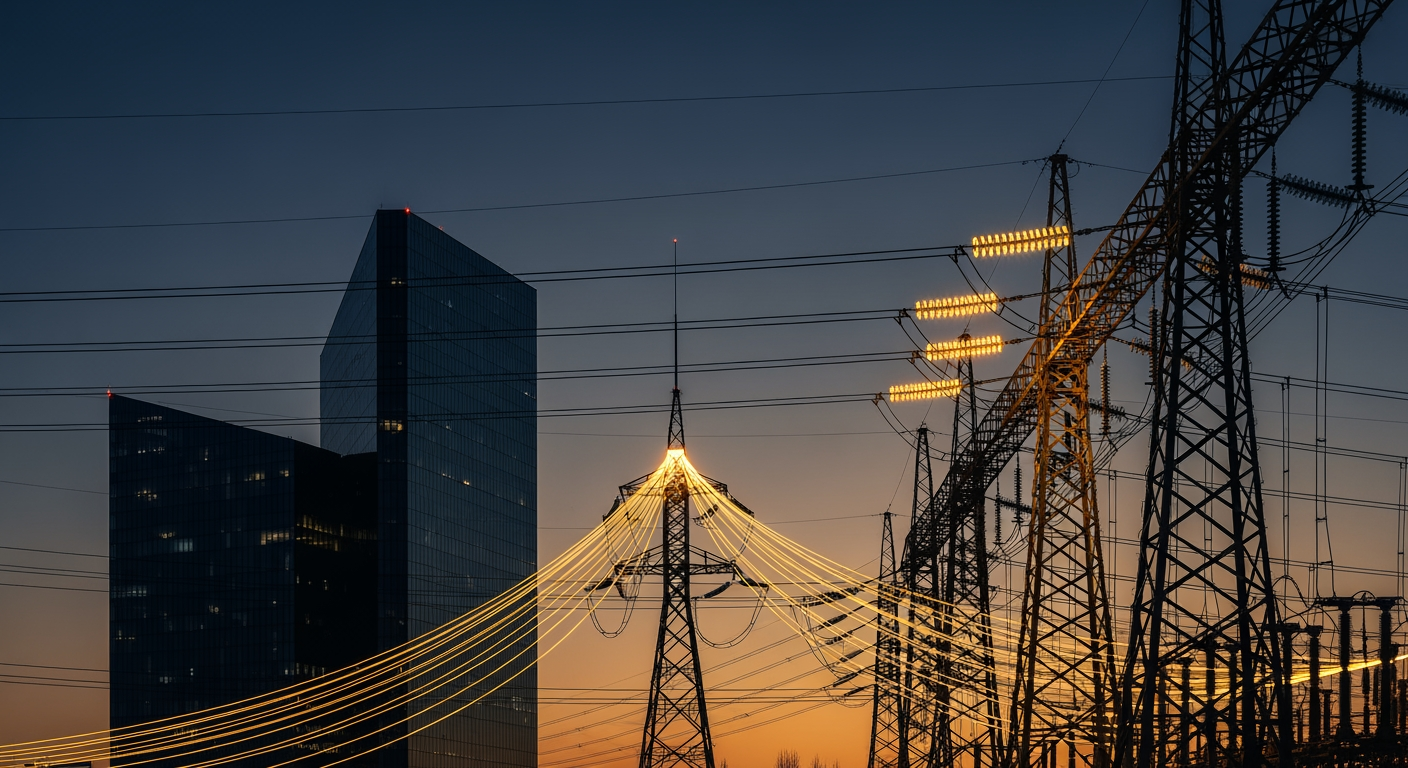
Everyone is fighting over the debt wall and the office discount. Meanwhile the real repricing is happening one layer down, in the thing nobody used to underwrite: access to power. When a data center prices at a 4.4% cap, you're not paying for concrete — you're paying for a megawatt already connected to a grid that can't add new ones fast enough (gas-turbine lead times: 7–8 years; PJM capacity: +1,040% in two years). The scarce, defensible, appreciating asset isn't the building. It's the interconnection. Powered land, on-site generation, and certified demand-flexibility are becoming the highest-margin position in the stack.
| |||||||||||||||||||||||||||||||||||||||||||||||||||
|
14 · Tools & The Signal Three tools, one signalIPMVP (EVO) — the M&V framework behind the Playbook, free. Honest take: dense, but the language your engineer, vendor, and lender should all speak when money rides on a savings number. Brokerage AI platforms (CBRE Nexus AI, JLL, Cushman) — portfolio-scale analytics. Honest take: useful for benchmarking if you're a client; remember you're feeding their training set. Fault Detection & Diagnostics (FDD) (category). Honest take: the most reliable, lowest-drama win in building intelligence — it surfaces failures that quietly bleed NOI. If you're early, start here, not with a moonshot.
| |||||||||||||||||||||||||||||||||||||||||||||||||||
|
15 · 📅 The Lookahead Dates that move the market
| |||||||||||||||||||||||||||||||||||||||||||||||||||
|
16 · OUR CONVICTION CALLS Where the digest ends and our opinion beginsFour calls we'd put our name on this week — with how strongly we hold them. These are opinions, not facts. Hold us to them.
| |||||||||||||||||||||||||||||||||||||||||||||||||||
| |||||||||||||||||||||||||||||||||||||||||||||||||||
The Intelligent Building Brief №1 — The Two-Speed Market